
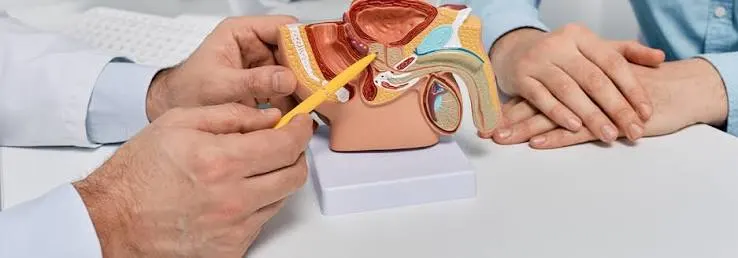
Peyronie’s disease (PD) is an acquired connective tissue disorder characterized by the formation of fibrous, non-cancerous scar tissue (plaque) inside the tunica albuginea of the penis. This fibrous scarring causes pain, severe curvature, indentations, or shortening during erections, often rendering sexual intercourse difficult or impossible. Despite affecting up to 10% of adult men, Peyronie’s disease remains widely underreported due to social stigma and anxiety.
The clinical progression of Peyronie’s disease occurs in two distinct phases:
As a board-certified urologist practicing in South Florida through his official website urologistflorida.com, Dr. Mourad Abouelleil provides individualized care for Peyronie’s disease. By evaluating disease stability, curvature severity, and baseline erectile function, Dr. Abouelleil guides men across Palm Beach County through modern non-surgical injections and advanced reconstructive surgical options.
[Injury / Micro-Trauma to Tunica Albuginea]
│
▼
[Active / Inflammatory Phase (6–12 Months)] ──► Painful Erections & Changing Curvature
│
▼
[Stable / Chronic Phase (12+ Months)] ──► Pain-Free Erect State & Fixed Curvature Angle
Distinguishing between the active phase and the stable phase is critical because invasive surgical correction is strictly contraindicated during the active phase, as ongoing tissue remodeling can compromise surgical results.
For men in either late active or stable phases who have a palpable plaque and a curvature deformity of at least 30 degrees, Collagenase Clostridium Histolyticum (Xiaflex) serves as the primary FDA-approved non-surgical therapy.
[Targeted Plaque Injection] ──► Enzymatic Breakdown of Collagen Cross-Links
│
▼
[In-Office Penile Modeling] ──► Mechanical Stretching & Realignment of Fibrous Plaque
When curvature is severe (> 60 to 90 degrees), complex (“hourglass” deformities), or non-responsive to injection therapy, reconstructive surgery provides a definitive, immediate correction.
┌──► 1. Tunica Plication (Shortening outer side)
│ (Best for curvature < 60°, good penile length, intact erections)
[RECONSTRUCTIVE SURGERY] ─────┼──► 2. Plaque Incision & Grafting (Lengthening inner side)
│ (Best for severe curvature > 60°, complex indentations, preserved length)
└──► 3. Penile Prosthesis + Manual Modeling
(Best for Peyronie’s disease WITH severe Erectile Dysfunction)
Plication procedures (such as the Nesbit or 16-dot technique) involve placing permanent sutures into the tunica albuginea on the opposite (convex) side of the curvature. Tightening these sutures pulls the longer side down to match the shorter side, straightening the penis.
For men with severe curvature or short penile length where further shortening is unacceptable, the surgeon incises (cuts) or partially excises the rigid plaque on the concave side to release tension. The resulting tissue gap is covered using a biocompatible tissue graft.
For men suffering from both severe Peyronie’s curvature and co-existing erectile dysfunction (ED) unresponsive to oral medications, placing an inflatable penile prosthesis (IPP) paired with intraoperative manual modeling addresses both conditions simultaneously, delivering complete structural straightening and reliable erectile rigidity.
| Parameter | Xiaflex Injection Therapy | Tunica Plication Surgery | Plaque Incision & Grafting | Penile Prosthesis (IPP) |
| Invasiveness | Non-surgical in-office injections | Outpatient surgical procedure | Complex outpatient surgical procedure | Surgical implant placement |
| Ideal Curvature | 30° to 60° moderate curve | < 60° simple curve | > 60° severe or complex curve | Any curve + severe ED |
| Impact on Length | Minimal / maintains length | Mild loss of length (~1–2 cm) | Preserves / restores length | Preserves / restores length |
| Erectile Function | Unchanged | Unchanged | Risk of new-onset ED | Restores 100% rigid erections |
| Recovery Time | Immediate routine activity | 3 to 4 weeks recovery | 4 to 6 weeks recovery | 4 to 6 weeks recovery |
Peyronie’s disease is a treatable condition, and men do not have to accept chronic pain or curvature. By determining whether your disease is active or stable and weighing your goals regarding penile length and erectile rigidity, Dr. Mourad Abouelleil provides customized medical and surgical treatment plans to restore sexual health and confidence.
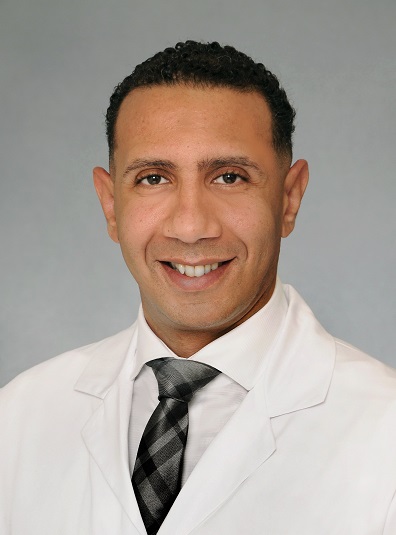
Dr. Mourad Abouelleil is a highly skilled and certified urologist renowned for his commitment to excellence in advanced urological procedures, including robotic prostatectomy and high-intensity focused ultrasound (HIFU). With state-of-the-art technology and extensive experience, Dr. Abouelleil offers personalized treatment plans tailored to meet the unique needs of each patient, ensuring high-quality medical care.
Error: Contact form not found.