
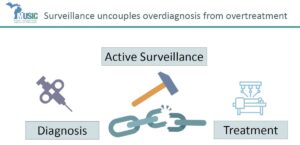
When men hear the words “you have prostate cancer,” the instinct is usually the same:
Get it out.
Dr. Mourad Abouelleil slows that moment down.
Not because cancer isn’t serious — but because not every prostate cancer behaves the same, and treating all of them aggressively can cause more harm than benefit in the long run.
The decision between active surveillance and surgery isn’t philosophical. It’s clinical. And it’s based on very specific data points that Dr. Abouelleil reviews with every patient.
Active surveillance isn’t a vague plan or a wait-and-see guess. In Dr. Abouelleil’s practice, it’s considered only when objective criteria are met.
Most men considered for surveillance have:
Surveillance means scheduled monitoring, not optional follow-up:
If those markers remain stable, surgery may never be necessary.
There are also very clear situations where surveillance stops being safe.
Dr. Abouelleil does not recommend active surveillance when he sees:
In these cases, delaying treatment doesn’t preserve quality of life — it risks losing the window for cure.
This is where experience matters.
Dr. Abouelleil does not rely on PSA alone. He evaluates:
Two men with the same PSA can receive different recommendations because their risk profiles are not the same.
That distinction is often missed in rushed evaluations.
When surgery is recommended, it’s because the cancer shows signs that monitoring won’t remain safe.
Surgical treatment offers:
Dr. Abouelleil discusses surgery only after explaining:
The goal isn’t urgency. It’s clarity.
Some men strongly prefer avoiding surgery. Others want cancer removed even when risk is low.
Dr. Abouelleil respects patient values — but does not override medical safety to accommodate anxiety or reassurance alone.
Surveillance is chosen when it is safe, not simply when it is desired.
Yes. Many patients transition to treatment after changes in PSA, MRI, or biopsy findings.
In properly selected patients, long-term data shows no increased risk when monitoring is done correctly.
No treatment offers guarantees. Surgery provides excellent control when used appropriately.
Some men remain on surveillance for many years without progression.
Making a decision based on fear instead of objective risk.
If you’ve been diagnosed with prostate cancer and are unsure whether active surveillance or surgery is appropriate, a thorough evaluation matters.
Dr. Abouelleil focuses on evidence-based decision-making, individualized risk assessment, and long-term men’s health outcomes.
Website: https://www.urologistflorida.com
Phone: (561) 291-7182
This decision shouldn’t feel rushed.
It should feel grounded.
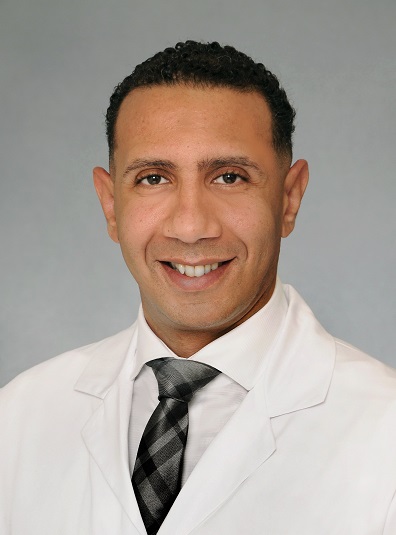
Dr. Mourad Abouelleil is a highly skilled and certified urologist renowned for his commitment to excellence in advanced urological procedures, including robotic prostatectomy and high-intensity focused ultrasound (HIFU). With state-of-the-art technology and extensive experience, Dr. Abouelleil offers personalized treatment plans tailored to meet the unique needs of each patient, ensuring high-quality medical care.
Error: Contact form not found.