
Hearing that a prostate biopsy came back “negative” should feel reassuring.
But for many men, it doesn’t.
The PSA is still rising.
Symptoms haven’t gone away.
Something still feels off.
At Dr. Mourad Abouelleil’s practice, this is a conversation that happens more often than people expect. A negative biopsy does not always mean cancer isn’t there. It sometimes means the cancer simply wasn’t sampled.
Understanding why prostate biopsies miss cancer helps patients know when to push for further evaluation — and when to seek a second opinion.
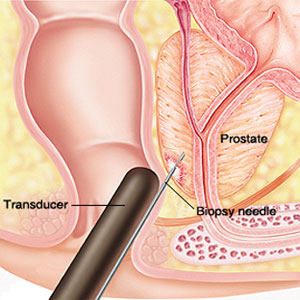
A prostate biopsy does not remove the entire prostate.
It samples small cores of tissue from selected areas.
That alone creates a limitation.
Prostate cancer can be:
If the needle doesn’t pass through the exact spot where cancer is present, the pathology report will come back negative — even if cancer exists elsewhere in the gland.
This is not rare. And it’s not always a mistake.
Traditional biopsies rely on a systematic but random approach.
Usually 10–12 cores are taken, guided by ultrasound.
The problem?
Ultrasound does not clearly show most prostate cancers.
So the biopsy is essentially educated guessing.
Dr. Abouelleil often explains to patients that this method works reasonably well for larger or more aggressive tumors, but smaller or anterior cancers can be missed entirely.
Some prostate cancers develop:
These locations are easy to miss with standard biopsy patterns.
This is one reason Dr. Abouelleil places heavy emphasis on imaging before repeating a biopsy, rather than simply doing the same test again and hoping for a different result.
Larger prostates dilute sampling accuracy.
In simple terms:
Men with enlarged prostates due to BPH may have cancer that is statistically easier to miss. This is especially relevant in men with persistently elevated PSA but repeated negative biopsies.
Early prostate cancer may:
That doesn’t make it harmless — but it does make it harder to catch without more targeted tools.
This is where experience and judgment come into play.
Many men are told, “Let’s just repeat the biopsy.”
Sometimes that’s appropriate.
Often, it’s not enough.
Dr. Abouelleil takes a more strategic approach:
A repeat biopsy without new information often leads to the same result.
Dr. Abouelleil incorporates advanced diagnostic decision-making, not just repeat testing.
That may include:
The goal is not more procedures.
The goal is the right procedure.
Dr. Abouelleil often recommends further evaluation when:
A negative biopsy is a data point — not the final word.
Missing cancer is not just about tools.
It’s about interpretation.
Experience helps a urologist recognize patterns:
This is where a specialist like Dr. Abouelleil adds value beyond a report.
Yes. Especially small, early, or anterior tumors.
Often yes — but not blindly. PSA trends and imaging matter.
That depends on PSA behavior, imaging findings, and clinical judgment.
MRI doesn’t replace biopsy, but it can guide it and improve accuracy.
No. Some need monitoring, some imaging, and some repeat biopsy. Individual assessment is key.
If you’ve had a negative prostate biopsy but still feel uncertain, a focused consultation can help clarify what comes next — and whether anything was missed.
Website: https://www.urologistflorida.com
Phone: (561) 291-7182
Dr. Abouelleil’s approach prioritizes accuracy, judgment, and patient clarity — not unnecessary procedures.
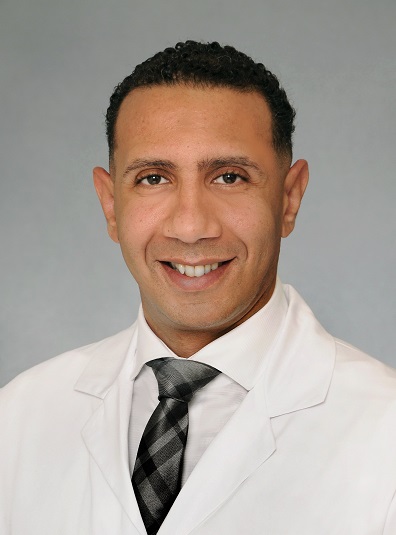
Dr. Mourad Abouelleil is a highly skilled and certified urologist renowned for his commitment to excellence in advanced urological procedures, including robotic prostatectomy and high-intensity focused ultrasound (HIFU). With state-of-the-art technology and extensive experience, Dr. Abouelleil offers personalized treatment plans tailored to meet the unique needs of each patient, ensuring high-quality medical care.
Error: Contact form not found.