
Upper Tract Urothelial Carcinoma (UTUC)—a malignant transformation of the urothelial lining in the renal pelvis or ureter—is a relatively rare but challenging urologic cancer. Historically, the standard reaction to a diagnosed renal pelvis or ureteral tumor was radical nephroureterectomy (RNU): the complete surgical removal of the entire kidney, the entire length of the ureter, and a cuff of the bladder.
While radical surgery delivers complete local tumor removal, losing an entire functioning kidney significantly increases long-term risks of chronic kidney disease (CKD), cardiovascular morbidity, and the potential need for dialysis—especially in patients with baseline renal impairment or bilateral disease.
Advancements in high-definition digital ureteroscopy, laser ablation, and intracavitary topical chemotherapy allow board-certified urologists to treat low-risk UTUC through kidney-sparing endoscopic protocols. As a specialist in endourology serving patients across South Florida through his practice at urologistflorida.com, Dr. Mourad Abouelleil utilizes minimally invasive techniques to destroy renal pelvis tumors while preserving vital renal function.
Not all upper tract tumors are candidates for endoscopic preservation. Clinical decision-making relies on strict risk stratification guidelines to balance kidney preservation with oncological safety:
[Diagnostic Workup: mpCT Urography + Flexible Ureteroscopy + Biopsy]
│
├─► High-Risk UTUC ──► Radical Nephroureterectomy (RNU)
│ (High-grade, invasive, > 2cm, multifocal, or hydronephrosis)
│
└─► Low-Risk UTUC ──► Endoscopic Kidney-Sparing Management
(Low-grade, unifocal, < 1.5–2cm, non-invasive imaging)
Endoscopic treatment of renal pelvis tumors is performed entirely through the body’s natural urinary pathway, requiring zero skin incisions:
[Retrograde Access via Urethra & Bladder] ──► Flexible Digital Ureteroscope Navigation
│
▼
[Holmium / Thulium Laser Ablation] ──► Precision tumor vaporization & vascular coagulation
│
▼
[Adjuvant Intracavitary Chemotherapy Gel] ──► Reverse-thermal hydrogel instillation for microscopic control
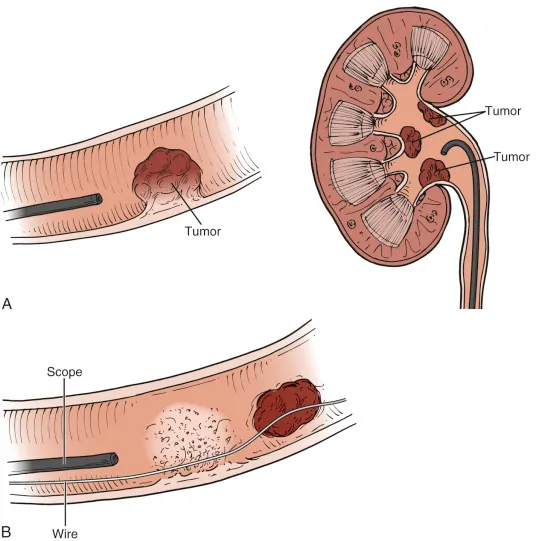
A primary challenge of endoscopic management has historically been high local recurrence rates due to the constant flow of urine washing away liquid chemotherapy drugs.
Modern protocols incorporate reverse-thermal hydrogel drug delivery platforms (e.g., Jelmyto / mitomycin pyelocalyceal gel):
| Clinical Factor | Radical Nephroureterectomy (RNU) | Endoscopic Laser Ablation + Gel Therapy |
| Surgical Approach | Full kidney & ureter extraction | 100% natural orifice (transurethral) laser care |
| Renal Function Impact | Permanent ~50% loss of total kidney capacity | 100% kidney preservation; minimal functional loss |
| Incision & Trauma | Multi-port robotic or open abdominal incision | Zero skin incisions |
| Hospital Recovery | 2 to 4 days inpatient stay | Same-day outpatient discharge |
| Surveillance Needs | Standard periodic CT scans & cystoscopy | Rigid surveillance: Ureteroscopy every 3–6 months |
A diagnosis of upper tract urothelial carcinoma in the renal pelvis does not automatically mandate the removal of your entire kidney. Through high-definition ureteroscopic laser ablation and targeted intracavitary gel therapies, Dr. Mourad Abouelleil provides low-risk UTUC patients across South Florida with an effective, kidney-sparing treatment path that prioritizes both cancer control and long-term renal health.
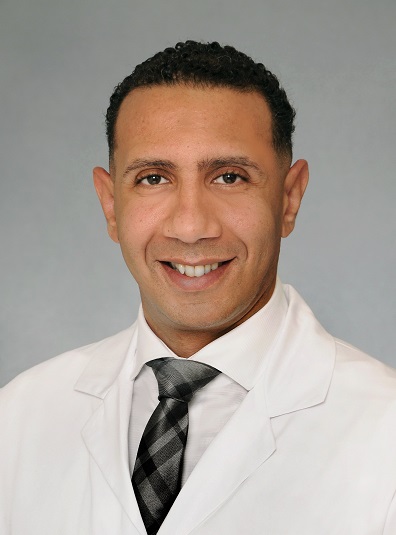
Dr. Mourad Abouelleil is a highly skilled and certified urologist renowned for his commitment to excellence in advanced urological procedures, including robotic prostatectomy and high-intensity focused ultrasound (HIFU). With state-of-the-art technology and extensive experience, Dr. Abouelleil offers personalized treatment plans tailored to meet the unique needs of each patient, ensuring high-quality medical care.
Error: Contact form not found.