
Kidney stones are a common and painful condition that affect millions of people every year. However, the two most effective treatment options are lithotripsy and ureteroscopy. But the question arises, which one offers better results? In this blog, Dr. Mourad Abouelleil will provide you with everything you need to know about Lithotripsy vs Ureteroscopy and which treatment option is more effective for kidney stones.
According to PubMed, the prevalence of kidney stones among U.S. adults is approximately 11.0%. Among adults with obesity, the prevalence of kidney stones rose from 11.0% (2007 to 2008) to 12.5% (2017 to 2020), according to PubMed.
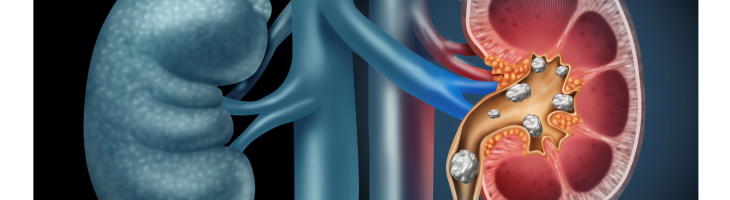
Kidney stones are solid accumulations of minerals and salts that form in the kidney when urine becomes too concentrated. The passage of kidney stones through the urinary tract may lead to significant discomfort, nausea, and traces of blood in the urine. It may be possible for small stones to leave the body naturally, but for larger stones, medication, shock wave therapy (lithotripsy), or surgical intervention may be necessary to disperse or extract them.
1. Concentrated urine: This is often one of the leading causes of kidney stone formation and occurs when the body does not consume enough fluids.
2. Dietary habits: The increased risk of developing kidney stones is enhanced by consuming excessive quantities of salt, sugar, or animal protein.
3. Medical / health conditions: A person who suffers from a metabolic condition, obesity, a chronic digestive disorder, or who has undergone specific surgical procedures is also at a greater risk of developing kidney stones.
4. Other contributing factors: Family history of kidney stones, being overweight, and using certain vitamin / mineral supplements are additional contributing factors to developing kidney stones.
The procedure of lithotripsy involves the use of both (or either) types of lithotripsy (extracorporeal shock wave lithotripsy and laser lithotripsy) to treat kidney stones, bladder stones, and ureteral stones. The main objective of lithotripsy is to break down larger-sized kidney stones, bladder stones, and ureteral stones into small enough pieces so they can be passed through urine.
In the process of lithotripsy, the health care provider will use one of two methods to perform the procedure:
1. Extracorporeal shock wave lithotripsy (ESWL) – This method uses high-energy shock waves sent from outside the body to break down the stones.
2. Laser lithotripsy – This method uses a laser, which is passed through the urethra (the tube from your bladder that allows you to urinate) to access the stones, and is then used to break down the stones into smaller pieces.
3. Miscellaneous methods to treat kidney stones, bladder stones, and ureteral stones may include:
Ureteroscopy is a medical procedure that uses a thin, flexible, lighted tube called a ureteroscope to examine the inside of the ureters. The ureters are tubes that connect each kidney to the bladder. Ureteroscopy may be used to diagnose and/or treat problems in the urinary tract, such as kidney stones, by allowing visualization of the ureters and, if needed, breaking up or removing stones and/or obtaining a tissue sample for analysis.
Here are some of the key differences between lithotripsy and ureteroscopy, some of which include the following:
| Feature | Lithotripsy (ESWL) | Ureteroscopy (URS) |
| Procedure | Non-invasive; shock waves break stones | Minimally invasive; scope removes/breaks stones directly |
| Best For | Small, soft kidney/upper ureter stones | Larger or lower ureter stones |
| Effectiveness | May need multiple sessions | Higher stone-free rate in one session |
| Recovery | Faster recovery, less pain | Longer recovery, more discomfort |
| Anesthesia | Often little or no anesthesia | Requires general anesthesia |
| Hospital Stay | Outpatient, no stay | May need short stay |
| Stent Use | Rare (≈3%) | Commonly used |
| Risks | Lower risk; may cause fragment blockage | Higher risk of ureter injury or infection |
| Cost | Usually less expensive | Usually more expensive |
Here are some factors that show which treatment is more effective for kidney stones:
| Factor | Ureteroscopy (URS) | Shock Wave Lithotripsy (SWL) |
| Best For | Larger, harder or lower ureter stones | Smaller, softer stones in kidney or upper ureter |
| Effectiveness | Higher success rate in a single session, direct stone removal | Less effective for large/hard stones, may need multiple sessions |
| Advantages |
|
|
| Disadvantages |
|
|
Stone size and location – smaller stones might be amenable to lithotripsy, whereas larger stones or stones lower in the urinary tract often require ureteroscopy for removal.
Stone hardness and composition – hard/dense stones require ureteroscopy to remove from the ureter.
Symptoms and severity – severe pain or blockage/obstruction, significant infection will typically need to be cleared from the ureter more quickly (via ureteroscopy).
Prior treatment results – if you have had recurrent stones or lithotripsy has not worked for you, ureteroscopy might be your best bet for success.
Overall health/medical history – if you are unable to undergo general anesthesia, lithotripsy may be your best option.
Recovery time – if you want to recover faster with less discomfort, lithotripsy might suit you better.
Risk of complications – ureteroscopy offers higher accuracy and lower risk than lithotripsy, but is more likely to require additional sessions.
To sum up everything stated so far, the information above on the topic “Lithotripsy vs Ureteroscopy: Which is More Effective for Kidney Stones?” outlines key differences between lithotripsy and ureteroscopy, and which treatment is more effective for kidney stones. If you are struggling with the symptoms of kidney stones, then you should consult Dr. Mourad Abouelleil today by dialing (561)2917182.
Question 1. Which treatment is more effective for kidney stones, lithotripsy or ureteroscopy?
Answer. Ureteroscopy typically achieves a higher stone-free rate in a single session, whereas lithotripsy is effective for smaller, softer stones.
Question 2. How long does it take to recover from ureteroscopy?
Answer. After ureteroscopy, most of the patients recover in a few days, although some may experience temporary discomfort or urinary symptoms for up to a week.
Question 3. How many sessions of lithotripsy are needed?
Answer. Some patients become stone-free after one session, but others may need 2 or more sessions, depending on the stone’s size and density.
Question 4. Do both procedures require a hospital stay?
Answer. Lithotripsy is usually outpatient, whereas ureteroscopy may require a short hospital stay, depending on the case.

Dr. Mourad Abouelleil is a highly skilled and certified urologist renowned for his commitment to excellence in advanced urological procedures, including robotic prostatectomy and high-intensity focused ultrasound (HIFU). With state-of-the-art technology and extensive experience, Dr. Abouelleil offers personalized treatment plans tailored to meet the unique needs of each patient, ensuring high-quality medical care.
Error: Contact form not found.