
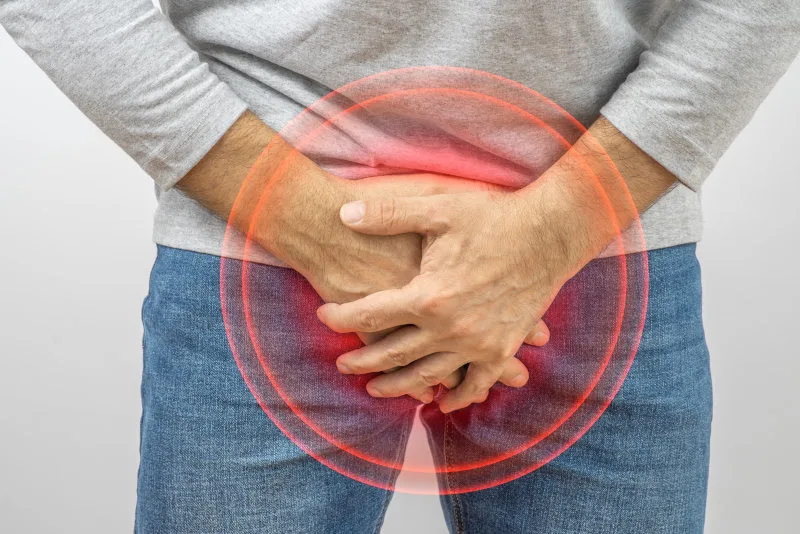
Male stress urinary incontinence (SUI)—involuntary urine leakage during physical exertion, coughing, sneezing, or lifting—is a distressing potential complication following prostate surgery (such as radical prostatectomy or TURP), radiation, or pelvic trauma. While pelvic floor exercises and lifestyle modifications serve as initial conservative steps, persistent moderate-to-severe leakage significantly impacts physical activity, social confidence, and daily quality of life.
When conservative measures are insufficient, modern reconstructive urology offers highly effective surgical solutions. Today, procedures ranging from transobturator male slings to the Artificial Urinary Sphincter (AUS) can restore continence and eliminate dependence on absorbent pads.
As a board-certified urologist with Palm Beach Health Network Physician Group serving patients across West Palm Beach, Palm Beach Gardens, and Port St. Lucie,Dr. Mourad Abouelleil provides comprehensive evaluation and advanced surgical interventions for male urinary incontinence.
Continence in men relies on two primary valves: the internal sphincter at the bladder neck and the external urethral sphincter located just below the prostate.
[Surgical / Radiation Trauma] ──► Impairs External Sphincter Valve Mechanism
│
▼
[Stress Urinary Incontinence] ──► Leakage During Abdominal Pressure Shifts
│
▼
[Diagnostic Stratification] ──► Mild / Moderate Leakage ──► Synthetic Male Sling
Severe / Post-Radiation ──► Artificial Urinary Sphincter (AUS)
During prostate removal or thermal ablation, the internal sphincter is inherently removed, making complete continent storage dependent entirely on the external sphincter. When the external valve tissue suffers weakness, nerve stun, or scar-related stiffness, leakage occurs whenever intra-abdominal pressure rises.
The male sling is a synthetic polypropylene mesh implant designed to act as a supportive hammock beneath the bulbar urethra.
For men with severe incontinence or those whose urethral tissue has been compromised by pelvic radiation, the Artificial Urinary Sphincter (AUS) remains the international gold standard.
[Fluid-Filled Occlusive Cuff] ──► Squeezes bulbous urethra closed at rest
│
▼
[Scrotal Control Pump] ──► Squeezed 2–3 times prior to urination
│
▼
[Fluid Shifts to Reservoir] ──► Cuff opens; bladder empties naturally
│
▼
[Automatic Refill Mechanism] ──► Cuff automatically closes after 60 seconds
The AUS is a fully concealed, fluid-filled three-piece prosthetic device:
When the patient needs to urinate, squeezing the scrotal pump transfers fluid away from the urethral cuff into the reservoir, opening the urethra. Over the next 60 seconds, fluid automatically flows back into the cuff, restoring the tight seal.
| Clinical Parameter | Synthetic Male Sling | Artificial Urinary Sphincter (AUS) |
| Incontinence Severity | Mild to Moderate (1–2 pads/day) | Moderate to Severe (3+ pads/day or total loss) |
| Mechanism Type | Passive urethral repositioning/support | Active mechanical sphincter replacement |
| Manual Dexterity Needed | None (urinated normally) | Requires basic hand coordination to pump |
| Pelvic Radiation History | Less effective; higher failure rate | Gold standard choice for post-radiation cases |
| Surgical Incisions | Single perineal incision (+ optional groin) | Perineal incision + small lower abdominal incision |
| Continence Rate | 75% to 85% significantly improved/dry | 85% to 92% complete or near-complete dryness |
Persistent urinary leakage following prostate treatment is a manageable condition that should not be accepted as a permanent burden. By evaluating urethral sphincter strength, prior radiation history, and leakage volume, Dr. Mourad Abouelleil provides personalized reconstructive pathways to restore dry function and quality of life.
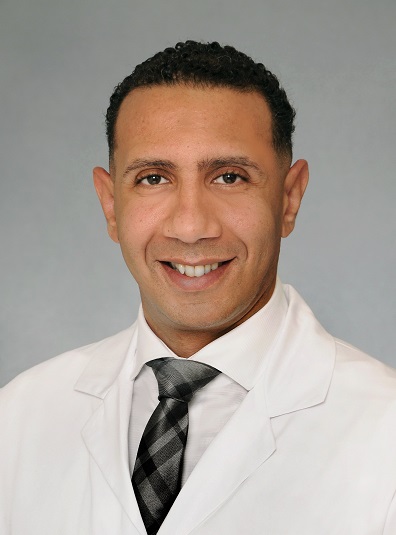
Dr. Mourad Abouelleil is a highly skilled and certified urologist renowned for his commitment to excellence in advanced urological procedures, including robotic prostatectomy and high-intensity focused ultrasound (HIFU). With state-of-the-art technology and extensive experience, Dr. Abouelleil offers personalized treatment plans tailored to meet the unique needs of each patient, ensuring high-quality medical care.
Error: Contact form not found.